
Why Passion Alone Won’t Build Your Career, But Competence Will

Farzad Khosravi
The No BS Startup Coach

Stop chasing passion. Chase competence. Passion feels like rocket fuel until the daily sludge, handoffs, Jira tickets, and calendar hell burn it out. I’ve watched plenty of “I love this work” types stall because their job didn’t match their actual strengths.
The lever that moves you forward isn’t excitement. It’s alignment. Skills × responsibilities × an environment that pays attention when you deliver. When those lock in, progress compounds. Passion emerges later, not at the outset. It’s a dividend, not the ignition.
And here’s the kicker: in a market that punishes thrash and rewards compounding, “follow your passion” is expensive advice. The better starting point? Ask yourself three blunt questions:
- Where do my skills already create value?
- Where do I actually own decisions?
- Who benefits directly from my work?
That’s where clarity begins. Passion can wait its turn.
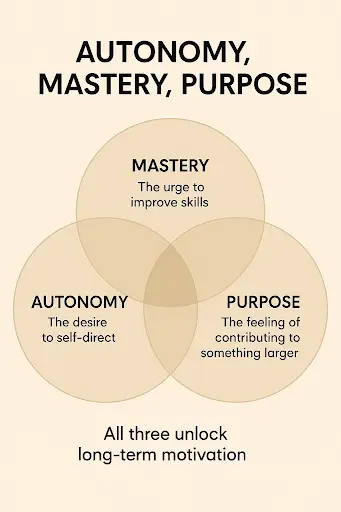
Lasting motivation doesn’t come from hype or adrenaline. It comes from structure. Every time I work with a founder or team, the same three pillars keep showing up:
- Autonomy: the freedom to decide how and when you work.
- Mastery: chances to actually get better at what you do.
- Purpose: knowing your effort matters to someone beyond you.
When those three click, people fall in love with the work. Not at the start, later, once momentum kicks in. Strip any of them away, and even a “dream job” starts to feel like sludge.
If you’re running on fumes, don’t chase another motivational hack. Look at where you’ve lost one of the three. That’s the real fix.
One client of mine had everything but autonomy. She was a brilliant teacher. Got better every year. Loved seeing kids light up. She knew her work mattered.
But the rules were suffocating. What she could teach, how she had to teach it, even the pace, it was all dictated. No room to move, no control. And eventually, the grind crushed her. Passion wasn’t the problem. Lack of autonomy was. She walked away.
That’s the mechanism people miss about motivation. It isn’t about pep talks or “positive vibes.” It’s about whether the daily structure lines up with what humans actually need to thrive. Autonomy. Mastery. Purpose. Take one away and the system collapses. No mindset hack will save you from a job that strips those out.
Why Emotional Clarity Beats External Validation
Ambitious people chase clarity in the wrong places. Titles. Performance reviews. Recognition. They treat those signals like proof they’re on track. The hits feel good in the moment, but they don’t build a stable career.
I’ve had clients with résumés that looked bulletproof still feel lost. They thought it was a discipline problem. It wasn’t. They were in the wrong rooms, measuring themselves against standards that never fit. The effort wasn’t the issue. The focus was.
When you stop leaning on outside validation, a different kind of clarity shows up. It’s quieter. But it lasts. One client told me, “I feel like I’m doing the things I need to be doing... I just need to trust myself and recognize I’m in a good place to take things in.” That shift, from seeking permission to trusting your own direction, was the turning point.
Real clarity doesn’t explode like fireworks. It feels grounded. Solid. You stop wasting energy chasing approval and start putting it into work that matters.
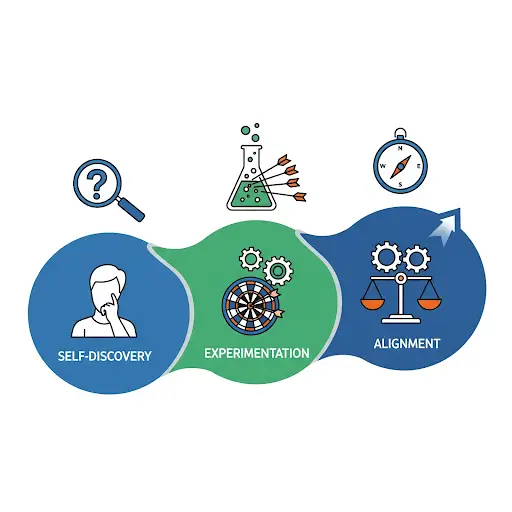
Building Career Clarity Through Self-Awareness
People assume clarity comes from big, flashy moves, career pivots, chasing a “calling,” blowing up everything to start fresh. Most of the time, that’s a distraction. Real progress starts when you slow down long enough to notice what your current work is already teaching you.
Reflection is underrated. Some of the sharpest breakthroughs I’ve seen didn’t come from job changes or dramatic leaps. They came when clients paused to ask two simple questions: what gives me energy, and what drains me? That’s better data than another dozen job applications.
One client said it best: “You don’t have to devote all of your time and energy to what’s next in order to get insight on what it should be.” That’s freeing. You can learn from the present without demanding instant clarity about the future.
If you’re stuck or overwhelmed, it doesn’t mean you’re failing. It means your brain is busy sorting priorities. Self-awareness builds in layers. Forcing it usually backfires. Pay attention. Let patterns surface. Then act when the signal is clear.
Trust Yourself More, You’re Not Behind
High performers often minimize their progress. They achieve plenty, yet they still carry the sense that they are behind. They wonder if they should be in a different role, working harder, or moving faster. That belief corrodes motivation.
One client voiced what many feel: “I’m still doing the things I need to be doing… maybe I just need to trust myself and recognize that I’m in a good place.” That was the turning point. Trusting momentum matters more than obsessing over the scoreboard.
The quality of your work follows the quality of your thoughts. The stories you tell yourself shape how you show up. When those stories emphasize failure or comparison, progress slows. When they emphasize competence and forward motion, growth compounds.
You are not behind. You are learning. In many cases, you are already building the right foundation but haven’t slowed down long enough to see it. Trusting that reality can shift your career more than any single tactic.
Let Competence Lead, and Passion Will Follow
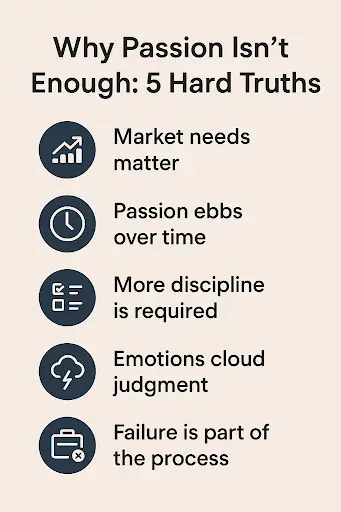
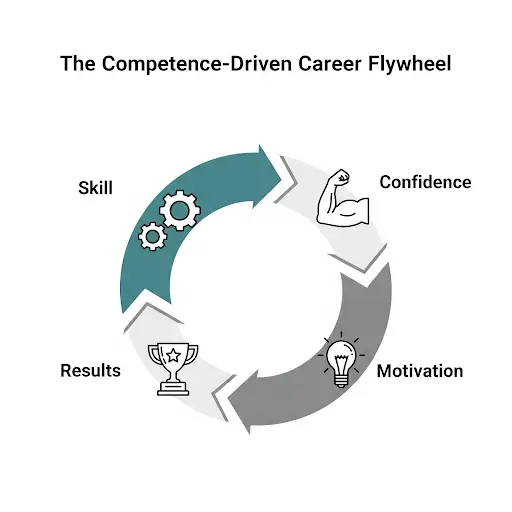
Work culture loves to shout about passion. But “follow your passion” has burned out more people than it’s helped. Passion isn’t bad, it’s just not enough. The truth is simple: people fall in love with their work after they see progress in something they’re already good at. Competence comes first. Passion shows up later.
That growth sustains only if three conditions exist: autonomy, mastery, and purpose. Freedom to decide how you work, the chance to improve, and the knowledge that your work matters, these are the conditions that protect motivation through setbacks.
Take away any of those, and even the most passionate people end up miserable. I’ve seen it across industries, levels, and careers. Same pattern every time. Companies that preach passion but offer no structure or alignment are setting people up to quit.
So if you’re thinking about your next move, don’t chase the loudest rush of excitement. Build where your skills already create momentum. Add structure. Track progress. Passion will catch up once the foundation is solid.
Why Competence Creates a Better Career Compass
The passion-first myth leaves ambitious people spinning. Competence gives you a real compass. It fuels motivation with daily wins. It creates leverage for growth. And it attracts opportunities passion alone can’t sustain.
You don’t need a miracle pivot to find clarity. You need three things: honest reflection, the guts to admit when one of the pillars is missing, and the discipline to ride momentum instead of chasing sparks. That’s what compounds into confidence and direction.
Long-term career satisfaction isn’t built on hype. It comes from aligning skill, autonomy, and purpose. Passion isn’t the starting gun. It’s the reward for doing the hard work of alignment. Competence is the lever. Passion is the dividend.
See more posts like this
Join The Sauce.
Weekly tactics to grow, lead, and build your startup without the fluff.
Join 2,500+ other founders