
How to Build an MVP (2026 Founder Guide)

3x founder · Coach to 500+ founders
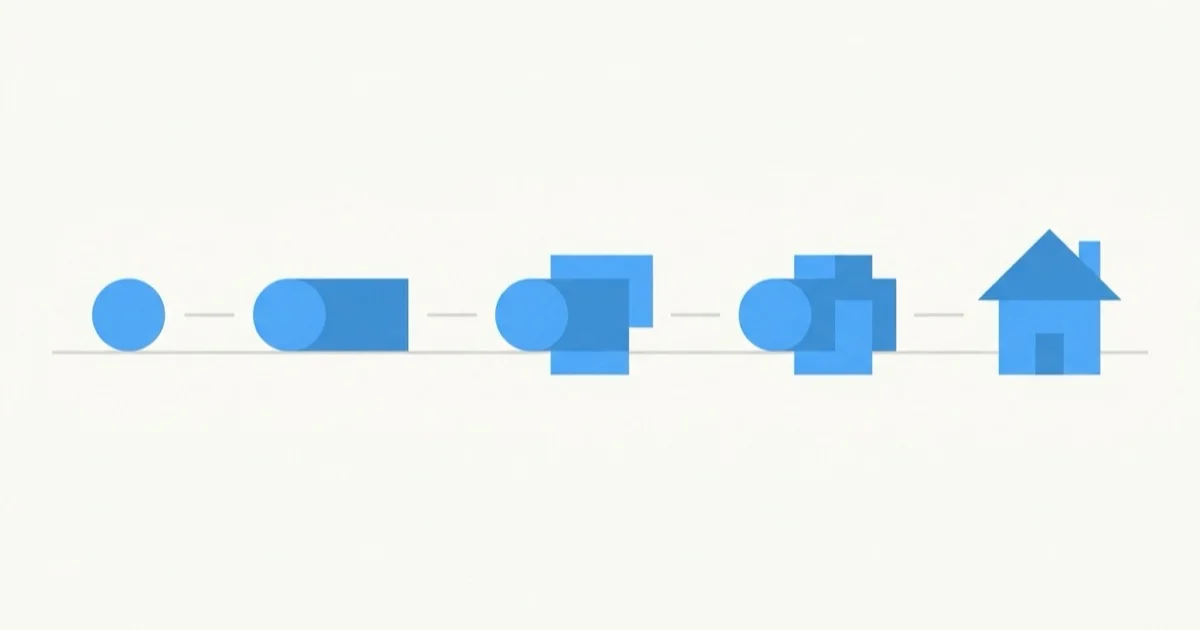
How to build an MVP that actually validates your idea
You have an idea. You’re tempted to start building. Don’t. Not yet.
The most expensive startup mistake is the one you can’t see: a 3–6 month build that ends with users who don’t show up. I’ve watched founders burn $50K and a year of runway on products that took 90 minutes of pre-launch conversation to disprove. The fix isn’t more discipline. It’s a different order.
This guide is the order. Four stages, in sequence: idea, validation, build, learn. Each stage has a job. Each stage has a way it fails. Skip a stage and you don’t save time. You just delay the bill.
If you’re past stage 2 (you’ve already talked to users and you have someone waiting to try the product), skim to Stage 3: Build for the five build paths. If you’re staring at a blank doc with an idea, start at Stage 1: Idea and run the stages in order.
The order: idea, validation, build, learn
- Idea. Write the hypothesis. Name one person it’s for. Define what would falsify it.
- Validation. Run cheap tests that ask people to act, not say. Pretotyping, fake-door tests, landing pages with a real Buy button. Find the threshold that means “go.”
- Build. Only after a real signal. Pick one of five build paths based on your constraints, not your preferences. Ship the minimum that proves the value loop.
- Learn. Measure what matters. Decide pivot vs. persist on data, not feelings. Most MVPs that fail at this stage failed at validation in stage 2.
Hit each stage in order. Don’t compress them. Don’t skip them.
How long does it take to build an MVP?
Four to twelve weeks for a version that proves the core value loop. Past twelve weeks you’ve stopped building an MVP and started building a v1 product. You’ve almost certainly skipped validation. Cut scope until the build fits the window. A six-month first build is the most expensive mistake on this page.
The clock is the constraint that keeps you honest. Every feature you add past week twelve is a bet placed before the first user shows up.
Stage 1: Idea
Most ideas die because they were never written down clearly enough to test. “An app for dog walkers” isn’t a hypothesis. It’s a category.
Here’s the form that works:
“I think [specific person in specific situation] has [specific painful problem] and would pay [specific amount] to fix it via [specific mechanism].”
Now you have something you can falsify. The Mom Test by Rob Fitzpatrick is the canonical resource here. Read the summary, then use the question patterns in customer conversations. Stop asking “would you use this?” Start asking “when was the last time you tried to solve this, and what did you use?”
Kill criteria. Before you talk to a single person, write down what would prove you wrong. “If 8 of 10 people I interview say they’ve already solved this with a spreadsheet and are fine with it, the idea is dead.” Founders who skip kill criteria never kill an idea. They just slow-bleed runway until something else forces the decision.
One concrete next move: open a doc right now. Write the one-sentence hypothesis above. Write three kill criteria below it. Total time: 15 minutes. If you can’t fill the blanks, you don’t have an idea yet. You have a vibe.
My startup Cicero.ly started as a newsletter, not an app. That was the stage-1 hypothesis: people who want better writing prompts will sign up for a weekly email. If the newsletter hadn’t grown, I would have known the deeper app version was a worse idea. And saved a year. It became a standardized web app, then a personalized web app, and only then a mobile app. Every step waited for the previous step to prove itself.
Stage 2: Validation
This is the stage that prevents most of the disasters in this guide. You’re not building yet. You’re spending $50–$500 to find out if anyone shows up.
Three cheap tests that actually work:
- The fake-door test. A landing page with the offer, the price, and a Buy button that goes to a “We’re launching soon. Drop your email for early access” form. Drive 100–500 visitors via paid ads or community posts. The threshold: click-through ≥ 5% in a neutral channel is a green light. Less than that and the offer isn’t tight enough. Fix the offer before you fix the product.
- Pretotyping (Alberto Savoia’s term). Fake the product just enough to watch real user behavior before you build. Manual fulfillment, a Notion doc instead of an app, a Substack instead of a platform. Cicero.ly’s first 18 months were a fully manual newsletter. That’s a pretotype. The threshold: real people use it without you reminding them. If you have to nag, the demand isn’t real.
- Pricing-page MVPs. Build only the pricing page and the checkout. If people complete checkout, you have a buyer who’s mad you don’t have a product yet. Refund them and ship. For a deeper walkthrough on what counts as a real demand signal vs. a vanity metric, the product market fit validation guide maps the difference (prepayments, LOIs, pilot requests) across the same Mom Test thresholds that apply here.
The honest failure mode: validation looks like wins because people are nice. A waitlist of 200 names where 3 people opened your follow-up email is a stage-2 fail dressed as success. The threshold isn’t “did people show interest.” It’s “did people do something costly to themselves to express interest.” Money, time, or specificity. Pick one signal that costs them.
If you want the full step-by-step before you commit to a stage-3 build, the 4-step validation framework walks the persona-hypothesis → market-listening → community-engagement → Mom-Test-interview sequence, with a free 5-day course to run alongside it.
When validation passes and you do ship, the next 30 days are owned by customer onboarding for startups. Most MVPs that “fail” shipped and lost users in the first session.
Stage 3: Build
Now you build. Not before. Pick one of five paths based on your constraints: timeline, budget, technical depth, equity tolerance. These are paths, not options. You pick one based on what your situation forces, not what sounds the most fun.
How do you build an MVP without a technical cofounder?
Three routes work in 2026. No-code tools like Bubble and Webflow handle forms, dashboards, and simple workflows. AI builders like Lovable and Bolt.new generate a working full-stack app in days if you can read and edit the output. An agency ships fastest and costs $50K to $200K.
Non-technical founders lose runway on the fourth route: hunting for a technical cofounder for six months before writing a single line of a hypothesis. Build the cheap version first. A cofounder who joins after you’ve proven demand joins on better terms anyway.
Path 1: Do it yourself, with or without cofounders
When it makes sense: you can ship the first user-facing version in 4–8 weeks of evenings. If your honest timeline is 6 months, you’re not on this path. You’re hiring something out.
If you don’t code, the no-code stack is mature enough in 2026 that you don’t need to learn. Join a community that builds in public:
100 Days of No-Code | No Code Founders | On Deck No-Code
For a fuller no-code stack (communities, web-app builders, mobile-app builders, automation glue), the no-code systems for startups guide walks the toolchain in depth. Bubble, Webflow, and Thunkable cover most of what early-stage founders need; Zapier or Make handle the automation between them.
Recommended tool for this path: Bubble. The most powerful no-code platform for web apps. Time-to-first-working-flow is 4–8 hours if you watch the official tutorials. Not the right tool if you need native mobile from day one.
AI-native tooling in 2026. If you have any coding background or can read and edit generated code, the AI-assisted development stack has changed what Path 1 looks like. Lovable and Bolt.new generate working full-stack apps from a written description in a matter of hours. Cursor is the better option if you want more control over what gets built and are comfortable editing the output. What took 6-8 weeks on a no-code platform in 2023 often takes 1-2 weeks with this toolchain today, provided you’ve written a clear spec.
The tradeoff is real. AI-generated code is production code, not a wireframe, which means technical debt accumulates faster than it does with no-code. Have a developer review the codebase before you hit meaningful user scale or start raising. The failure mode usually isn’t bad AI output. It’s an underspecified prompt producing a system that breaks at edge cases you didn’t anticipate.
Path 2: Hire an agency
When it makes sense: you have funding (raised round or strong personal savings, roughly $50K–$200K for an MVP scope), you don’t want to manage developers individually, and your domain isn’t unusual enough that an agency would have to invent the field. Agencies are expensive, and the final invoice usually runs higher than the initial quote. But they ship.
You can find vetted agencies via Clutch, Upcity, or Breef.
Honest failure mode: agencies optimize for shipped-on-time, not for product. You’ll get a working app that misses the point unless you spend 2–3 hours per week reviewing builds and pushing back. Plan for that.
Path 3: Hire your own developers and designers
When it makes sense: you’ve managed engineers before, you want long-term ownership of the build, and you can do the project-management work without losing the strategy hat. You’ll spend 30–50% of your week on people-management instead of customer development. That’s a real tradeoff.
Pre-vetted talent via Upwork | TopTal | Remote Base | Howdy. Toptal is the most expensive and most reliable; Upwork is the cheapest and most variable; Remote Base and Howdy sit between with strong LATAM talent.
Path 4: Apply to venture studios
When it makes sense: you’re willing to trade significant equity (often 20–50%) for build capacity, network, and follow-on funding. Venture studios build the company with you, sometimes around your idea but often around theirs.
Colab | Betaworks | Atomic | Next Big Thing | High Alpha.
Honest failure mode: founders mistake venture studios for accelerators. Accelerators give you a check and a network in exchange for roughly 7% equity. Venture studios run the company. If you want autonomy, this is the wrong path.
Path 5: Cofounder agencies (build-for-equity)
When it makes sense: you don’t have funding, you don’t want to dilute to a venture studio, but you can’t ship alone. Cofounder agencies take 5–25% equity in exchange for building the MVP and sometimes staying on as fractional CTO.
Spiritt | start-up.house | Crowdbotics.
Honest failure mode: these arrangements get messy when the company succeeds. The equity grant happens in month 1; the strategic disagreements happen in year 2. Use a real cofounder agreement with vesting, cliff, and termination clauses. Not a handshake.
For every path: keep talking to users during the build, not just before it. The teams that talk to users weekly ship products that work; the ones that stop talking ship products that demo well and die at launch. The same product-team discipline lives in the build-products-customers-love guide: wireframe tools, customer-feedback loops, and the difference between asking “do you like this?” and watching what users actually do.
Stage 4: Learn
You shipped. Now the work starts.
Stage 4 is where founders confuse “users in the door” with “product-market fit.” The build doesn’t validate the idea. Usage does, and only certain kinds of usage count.
Pre-PMF metrics that matter. Three numbers, in this order:
- Activation rate. What percent of signups actually get to the value moment? If you’re below 40% in a B2C app or 60% in a B2B SaaS, the onboarding is fighting the user, not the idea.
- Week-2 retention. Of activated users, what percent come back 7–14 days later without a reminder? Below 20% is a real problem. Below 10% is a “shut it down or pivot hard” signal.
- Unprompted referrals. Does anyone tell someone else without you asking? Even one referral from a non-friend in the first 30 days is a strong signal. Zero referrals in 90 days is a stage-2 failure that showed up at stage 4.
The pivot-vs-persist rule. Persist if the trend lines are moving in the right direction across two consecutive 4-week windows, even if absolute numbers are low. Pivot if the trends are flat or declining for 8+ weeks despite three or more product iterations. Most founders pivot too late. They keep iterating on UI when the problem is the offer.
When an MVP becomes the product. It becomes the product when removing features hurts more than adding them. If you’ve shipped 12 features and removing any 3 would lose paying customers, you’re past MVP. If you’ve shipped 12 features and could remove 9 without anyone noticing, you’re still in MVP. Keep cutting, don’t keep adding.
The honest failure mode at this stage: most MVPs that fail at stage 4 actually failed at stage 2. Validation was hand-waved, the wrong problem got built, and stage 4 metrics are now telling you what stage 2 metrics would have told you for free. The fix isn’t more A/B tests. It’s going back to validation with the actual users you have now.
FAQ
How long should building an MVP take?
4–12 weeks for a v1 that proves the core value loop. If your timeline is 6+ months, you’re not building an MVP. You’re building a v1 product, and you’re probably skipping validation. Cut scope until the build fits in 12 weeks.
What's the difference between an MVP and a prototype?
A prototype demonstrates that something is possible (technically or visually). An MVP demonstrates that someone wants it enough to use it. Prototypes live in Figma and on demo videos. MVPs live in production with real users.
Do I need to validate before building?
Yes. The one exception is when the build is the validation: a 1-day no-code build that runs the fake-door test for you. Anything longer than a few days of build time without a validated signal is a bet you don’t need to make.
Should I build my MVP with no-code?
If the value loop fits no-code (forms, dashboards, simple workflows, content), yes. It’s faster and cheaper. If you need real-time data, custom logic, or anything performance-sensitive, no-code becomes the constraint at scale. Plan to rewrite the no-code MVP in real code once you have product-market fit signal, not before.
What to do next
Open a doc. Write the one-sentence hypothesis from Stage 1. Write three kill criteria. Pick one validation test from Stage 2 you can run this week. Don’t build yet.
If you’re past validation and ready for Stage 3, the five build paths above cover every realistic option for a 2026 founder. Pick the one your constraints (timeline, capital, equity tolerance) make obvious. Not the one that sounds the most fun.
If your build path requires outside capital, the deck comes after the MVP, not before. The 10 slides investors actually read breaks down what each slide needs to earn, so your traction slide isn’t a Proof slide held together with screenshots.
This is the build stage. The stages before (idea, validation) and after (growth, scale) sit in The No BS Startup Guide. Once you have built something worth selling, the startup pricing strategy guide shows how to charge without underpricing by default.
Stuck or need help? Reply to the newsletter form below with the one-sentence hypothesis you just wrote, and I’ll tell you which of the four stages you’re actually in.
Related Startup Guides
All articlesLaunch
Build Startup Products Your Customers Come Back For
The founder who listens before building beats the one who ships first and asks later. How to build startup products customers actually use and keep using.
Launch
Startup Pricing Strategy: You're Undercharging by 3-5x
A client went from $19 to $149 a seat in one week and converted better. The framework: 3 pricing models, a 10-prospect price ladder, when to raise.
Launch
Product Market Fit Validation: Stop Building Blind
Product market fit validation, done with evidence instead of hope. The Sean Ellis 40% test, the signals that prove real demand, and when to build an MVP.
Farzad Khosravi
No BS Startup Coach · 500+ Founders Coached
I help early-stage founders launch, grow, and lead with clarity. I cut through the noise to the few tactics that actually change your numbers. I've coached 500+ founders across validation, growth, leadership, and fundraising.