
How to Validate Your Startup Idea (Before You Waste Months Building It)

3x founder · Coach to 500+ founders
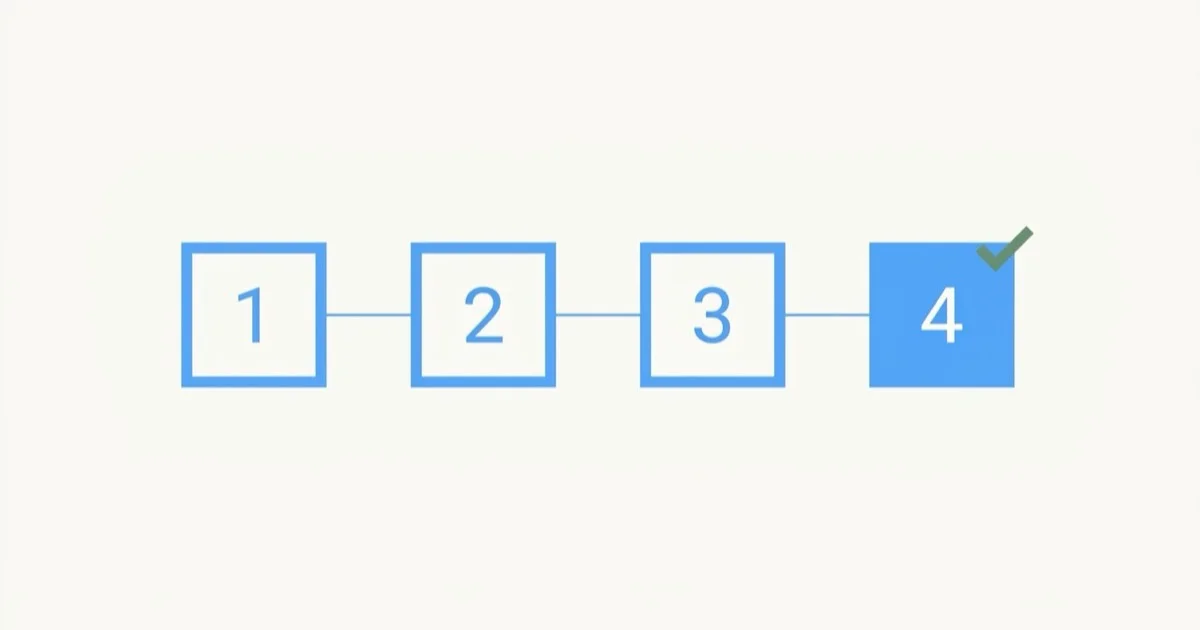
Validate Your Startup Idea Before You Build (Or Regret It Later)
The step-by-step playbook that could save you $100K and months of wasted time.
So here’s a classic startup story.
(Honestly, if there were a Startup Bible, this would be page one.)
John poured months of my life and thousands of dollars into a product he was sure people needed.
It had features.
It had polish.
It had roadmap.
But when he launched?
The silence was so loud it felt like a personal attack.
No one signed up. No one cared.
If this sounds familiar, you’re not alone. I’ve coached 500+ founders, and I see this mistake all the time.
The good news? It’s entirely avoidable.
All you need to do is validate your startup idea before you build.
By the way, if you prefer watching over reading, you can jump into my YouTube video here.
Otherwise, let’s continue…
The 4-step validation playbook (the short answer)
You don’t validate by building. You validate by talking, reading, and watching, in that order. Here is the whole framework in 4 sentences before we go deep:
- Draft a persona hypothesis. Pick one real human you can name, list their job, their failures, and what they have already tried. If you can’t name 3 specific people who fit, your persona is too vague.
- Spy on the market. Read 1-star reviews of every competitor in the space and quote the language they use. The 1-star reviews are your roadmap.
- Engage in the wild. Go where these people already complain (Reddit, Slack, Discord, Facebook, X) and ask one open question per thread. Listen for emotion.
- Run The Mom Test interviews. Ask about their past, not your idea. If 4 of 5 interviews fail to surface the problem unprompted, you have a problem-fit issue, not a solution-fit issue. Go back to Step 1.
That is the playbook. The rest of this post is what each step looks like in practice, what kills it, and the threshold that tells you to move on.
Why validating your startup idea matters (and why your Notion doc isn’t enough)
Most startup stories start the same way:
I had this great idea… so I started building it.
They fall in love with the product.
Start shipping features.
Polish the design.
Burn through savings.
Raise a little money.
Add more features.
Still… no users.
So what do they do?
They double down. On the wrong thing.
I’ve seen founders spend $200K just trying to keep a bad idea alive.
Not because they’re lazy. But because they skipped the one step that actually matters:
Validation.
A simple 4-step system to validate your startup idea (before it eats your life)
Use it to save time, money, and your sanity.
(And hey, want to actually do this while you read?
Grab the 5-Day Validation Course and follow along.)
Step 1: Draft a Persona Hypothesis
If your product is for everyone, it’s for no one.
Pick one real human. Give them a name.
Figure out:
- Their role and situation (e.g. “Allison the overwhelmed CPA”)
- What’s hard about their work/life?
- What have they already tried to fix it?
Bonus: Use Think / See / Feel / Do to walk in their shoes.
The failure mode: if your persona is your cofounder, you don’t have a persona. Cofounders are statistical anomalies. They tolerate your worldview, share your bias, and will buy anything you build. Build for a real customer or you’ll build for an audience of one.
The concrete output: a 1-page Notion sketch (or paper, or Napkin.ai, a visual-thinking tool that turns text into rough diagrams in 30 seconds) with the persona’s name, job, the 3 hardest parts of their week, and what they’ve already tried. You should be able to show this to a stranger and have them say “yeah, I know someone like that.”
The threshold to move on: can you name 3 specific people (not personas, not “people like X,” but real humans with real LinkedIn profiles) who match this persona? If yes, move to Step 2. If no, the persona is either too narrow (your one friend) or too vague (“small business owners”). Tighten and repeat.
Step 2: Spy on the Market
Time to stop guessing.
Search competitor reviews. Use AI tools like Perplexity, ChatGPT, and GummySearch to find:
- What’s already out there
- What sucks about it (check the 1-star reviews)
- Where you might fit in (aka your “wedge”)
Look for comments like:
“Too clunky”
“Doesn’t work for [my use case]”
“Good idea… but feels half-baked.”
These are not complaints. They’re invitations.
The failure mode: treating G2 or Capterra summary scores as the signal. The summary score is the average of people who bothered to leave a review: the loudest, not the median. Read the individual 1-stars. Read the 3-stars. The 5-stars are noise; the 1- and 3-stars are where the wedge lives.
The concrete output: a single document with the 5–10 most common 1-star complaints across all competitors, quoted verbatim. Each complaint gets one line about which competitor it was against and which feature triggered it. This is your wedge map. The “Doesn’t work for [my use case]” complaints in particular are gold. Those are entire underserved segments.
The threshold to move on: you can quote 3 specific phrases that real customers use to describe the problem, in their words, not yours. If you’re still using your own language, you haven’t read enough yet.
Step 3: Engage in the Wild
Get off your landing page. Go where your users hang out:
- Reddit subs
- Facebook groups
- Discord servers
- Slack communities
- X/Twitter conversations
Start with this line:
“Anyone here struggling with [specific pain]? Curious what you’ve tried.”
No pitches. Just conversation.
Listen for emotion. What frustrates people? What language do they use?
Inquire.
The failure mode: posting your landing page in r/Entrepreneur and calling it “validation.” Reddit’s pitch filter is loud. Your post gets buried, you get one rude comment, and you conclude the market is wrong. The market is fine; the channel was wrong. Go to where your users already complain about the problem, not where they go to evaluate products.
The concrete output: 10 unprompted comments from 10 distinct people who described the problem in their own words. Save them in a doc. The pattern in their language matters more than the count.
The threshold to move on: at least 3 of the 10 comments make a real-world ask (“does anyone know a tool that…?”, “how do you all handle…?”). Those are pre-qualified inbound leads. You can DM them and ask for a 20-minute call. Zero of those, and the problem isn’t urgent enough to talk about publicly; it’s not a startup-grade pain.
This is also the step that most often triggers the primal trap. Your brain reads the silence as personal rejection and pulls you back to “just build the thing.” Resist. Silence in the wild means you’re in the wrong room; it does not mean your idea is bad.
Step 4: Run The “Mom Test” Interviews
Stop asking, “Would you use my product?”
Instead, ask:
- When was the last time you tried to solve this?
- What did you use?
- What sucked about it?
- Would you pay to fix it?
You’re not validating your idea. You’re validating their problem.
The Mom Test is Rob Fitzpatrick’s book. Read it before your first interview. The premise: people lie to be polite. So you stop asking about your idea (which they’ll praise) and start asking about their past (which they can’t fake).
The failure mode: taking enthusiastic agreement as a signal. “Yeah I’d totally use that” means nothing. Your friend’s mom would say the same thing about a feature she’d never open. The only signal is action: did they pay, did they refer someone, did they show you the spreadsheet they currently use? Words are free.
The concrete output: 5 interviews documented with answers to the 4 questions above, plus what tool or workaround they’re using today. If “nothing” is the answer, the problem isn’t a problem.
The threshold to move on: 4 of 5 interviewees surface the problem unprompted in the first 5 minutes. If you have to lead the witness, the pain is yours, not theirs. Go back to Step 1 and reconsider the persona.
Real Story: How Josh Saved $100K
Josh almost spent six figures building a powerful analytics tool for CFOs.
Then we validated.
By reading competitor reviews and talking to actual people, we found a common theme:
CFOs didn’t want complexity. They wanted simplicity.
Josh pivoted.
- Simplified the dashboard.
- Got paying customers in under 3 months.
- Broke even within the year.
That $100K? Never needed to be spent.
Once you’ve validated the signal, the MVP build sequence keeps you honest through the build. Five paths to choose from based on your timeline and budget, with the same Mom Test thresholds running in parallel.
What validation is NOT
Validation gets confused with four adjacent activities. They’re useful, but they’re not the same thing.
- Market research is not validation. Market research tells you the TAM and the competitive set; validation tells you whether a specific persona will pay you to solve a specific problem. You can have a $50B market and zero buyers.
- A customer survey is not validation. Surveys measure stated preference, not revealed behavior. “Would you use this?” answered yes by 70% of respondents converts to a 2% pay rate in the wild. Throw the surveys out; do the interviews.
- An MVP is not validation. The MVP build sequence comes after you’ve validated the problem. Building before validating just makes the wrong product faster. The MVP tests “can we make a solution work?” Validation tests “does anyone want a solution at all?”
- A focus group is not validation. Focus groups produce groupthink. One loud opinion sets the room. Run individual interviews. The noise cancels out across 5 quiet conversations.
The signal you want is behavior, not opinion. Track what people did the last time they had the problem. That’s the real data.
FAQ: Startup idea validation
How do I know if my startup idea is good?
The question is backwards. You don't evaluate the idea. You evaluate the evidence. A startup idea is worth pursuing when three things are true: you can name real people (not personas) who are actively dealing with the problem today; when you talk to them without pitching, they bring up the pain in the first five minutes; and they're already paying for a workaround, even a bad one. That's the signal. Not "this sounds useful" or "people agreed when I described it." Actual behavior: they're already spending time or money trying to solve it. The 4-step framework above is designed to surface exactly these signals before you write a line of code.
How long should startup idea validation take?
Two to four weeks of focused work, not four months. If you're past the 30-day mark with no real interviews, you're not validating. You're researching. The 5 Mom Test interviews are the binding gate; everything else compresses around them.
What's the difference between validation and a customer survey?
Surveys measure stated preference (what people say they'll do). Validation measures revealed behavior (what they actually pay for, or actively try to solve today). Surveys are cheap and lie; interviews are slow and tell the truth.
Do I need to build an MVP to validate?
No. The MVP comes after. See the MVP build sequence for the five paths once your persona and problem are signed in blood. Building before validating is the most expensive mistake in this guide.
What if my idea fails validation?
Then validation worked. The cost of finding out now is the two weeks you spent on the 4 steps. The cost of finding out after you build is the Josh scenario above without the rescue: months of dev work and tens of thousands of dollars. Go back to Step 1: pick a different problem for the same persona, or a different persona entirely.
Skip the guesswork
Before working through the full 4 steps, run a quick diagnostic on where you stand. The Startup Idea Validation Scorecard scores your idea across 10 weighted criteria, takes 3 minutes, and tells you which stage of this framework to focus on first.
Want to validate your startup idea in under an hour?
I created a free 5-day email course that walks you through the 4 steps with prompts and examples.
It is email-based, easy to follow, and one short lesson per day for a week.
No theory. Just clear prompts, tool links, and examples that work. This is the first step in our comprehensive startup guide.
Get the 5-Day Validation Course.
Want the 5-Day Validation Course?
Before you build something your users politely ignore.
✓ Spot the market gap
✓ Find your actual users
✓ Skip the my only user is my cofounder’s mom scenario
Related startup guides
Use the startup guide to see where validation fits in the full company-building sequence. If you are still shaping the idea, start with first principles thinking for startup ideas. If you already have demand signals, move into product market fit validation. For the exact interview technique that turns a hypothesis into evidence, read the customer discovery interview framework.
Related Startup Guides
All articlesLaunch
Product Market Fit Validation: Stop Building Blind
Product market fit validation, done with evidence instead of hope. The Sean Ellis 40% test, the signals that prove real demand, and when to build an MVP.
Ideation
Problem Validation: Are You Solving a Real Problem?
Problem validation is the step most founders skip. How to tell if you are solving a real, painful problem before you spend months building the wrong product.
Ideation
How to Find People to Interview for Customer Discovery
How to find people to interview for customer discovery: four channels, the questions that screen them, and the sampling rule that keeps ten calls honest.
Farzad Khosravi
No BS Startup Coach · 500+ Founders Coached
I help early-stage founders launch, grow, and lead with clarity. I cut through the noise to the few tactics that actually change your numbers. I've coached 500+ founders across validation, growth, leadership, and fundraising.