
First Principles Thinking: Startup Ideas Nobody Can Copy

3x founder · Coach to 500+ founders
Every article about first principles thinking tells the same story. Elon Musk looked at a $65 million rocket launch, priced out the aluminum, titanium, copper and carbon fiber, and found the raw materials cost a small fraction of the sticker. Break the problem into fundamental truths. Rebuild from there.
The story is true. It is also where almost every article stops, which is why a founder can read ten of them and still not produce a single usable idea.
The gap is not inspiration. It is that nobody publishes the operational part: how deep to go, when to stop, and how to tell a real decomposition from one that quietly walks you back to the idea you already wanted to build.
What is first principles thinking?
First-principles thinking breaks a problem into the parts you know are true, then rebuilds a solution from those parts instead of copying what exists. For a founder it works as an ideation tool. You decompose why a market operates the way it does, find the constraint everyone treats as fixed, and build against the one that turns out to be real.
That definition is the easy half. Here is the half that decides whether you get an idea out of it.
This is not the 5 Whys
The 5 Whys was designed for a factory floor. Why did the machine fail? It runs in a straight line, one cause per level, and it tends to stop at “human error” or “not enough training.”
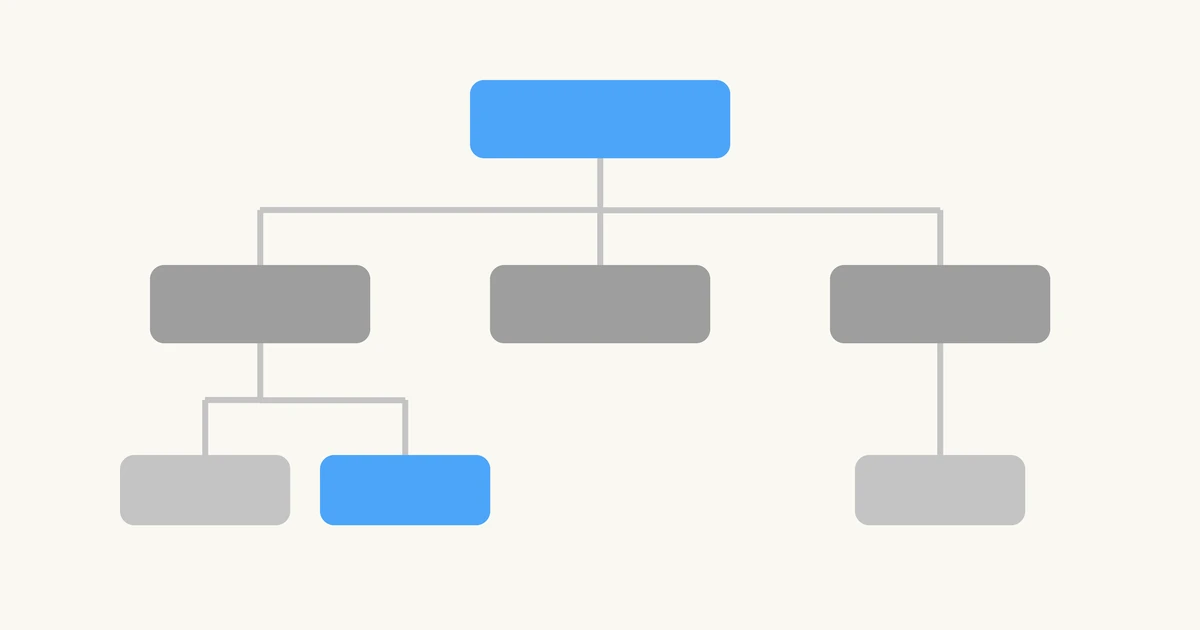
First-principles decomposition for ideation runs a different shape. It branches. Multiple parallel causes at every level, which you then recombine.
| 5 Whys (operations) | First principles (ideation) |
|---|---|
| Linear chain | Branching tree |
| Single root cause | Multiple parallel roots |
| Often stops at the surface | Forces you past plausible-sounding stops |
| Built for “why did this fail?” | Built for “why does this market exist this way?” |
The test takes five seconds. If your decomposition produces exactly one answer to each “why,” you are running the 5 Whys with a better name on it. Two parallel causes at level two (“dentists charge too much for insurance work” plus “patients don’t understand what they’re paying for”) produce leaf ideas that neither one reaches alone.
When first principles thinking is the wrong tool
Nobody writes this section, so read it before you spend two hours drawing a tree.
Skip the exercise when:
- You’re past ideation. In validation, launch or growth, the bottleneck moved to execution. Analysis will not move it back.
- You already validated the problem. Go run a fake-door landing page instead. You are past the point where more thinking helps.
- You’re in fast-moving consumer AI. Three months of decomposition is a permanent loss of position. Ship a v0 in two weeks and learn from what happens.
- You’re doing 1-to-n work. Another vertical SaaS in a saturated category, another direct-to-consumer brand. First principles is built for 0-to-1 jumps. Here, running the known approach faster beats theory.
- You’re justifying an idea you already wanted to build. That is confirmation bias, not analysis, and the tree will hand your idea back to you looking rigorous. Pressure-test the assumption with five user interviews instead.
How to use first principles thinking to generate startup ideas
Four steps. One session, two at most, about two hours a pass. The output is three to five concrete ideas specific enough to test.
Step 1: Pick a problem you’ve seen up close
Up close means one of three things. You’ve lived it. Your customers complain about it. Or you watched someone waste real time and money on it. If you can’t point at one of those, you’re guessing, and no amount of branching fixes a guess.
Most founders only ever use lived experience. Two other sources surface problems your competitors can’t see:
Schlep-blindness. The biggest underserved markets are protected by how unpleasant they are. Payments compliance became Stripe. Banking integration became Plaid. Corporate cards became Ramp. Founders read these as boring. They aren’t boring, they’re hard, so nobody takes them.
The adjacent possible. What became buildable in the last two years because inference got cheap, dev cycles got faster, or fixed costs dropped? Those problems carry the least competition, because most founders still reason from the old constraints.
Good problem areas are narrow. “Dental practices” beats “healthcare.” “Customs brokerage paperwork” beats “logistics.” Look for incumbent software written before 2015 and a workflow eating five or more expert hours a week per practitioner.
Step 2: Widen the search before you narrow it
A single prompt to an LLM returns the statistically most likely answer, which is the consensus every other founder also receives. Ask for ten startup ideas in dental tech and everyone gets the same ten.
Run five passes instead, each one feeding the next:
- Ask. Surface the consensus you’re going to attack.
- Invert. What’s the opposite, and what evidence would make it true?
- Steelman. Make the strongest case the inversion is wrong.
- Disagree. Now argue with both. What’s a third frame?
- Synthesize. What’s the wedge a founder could exploit in 2026?
Run the same prompt through two models. Cross-model disagreement is your adversarial check, and it costs nothing.
Three failure modes catch founders on the first attempt. The model invents market sizes, so treat any “$4.2B market” as a guess until you verify it somewhere that cites a source. The model cheerleads by default, so open each pass with explicit permission to disagree. And the worst one: you get a great-sounding answer and skip validation entirely. LLM agreement proves nothing. Ten people in the industry saying they’d pay proves something.
Step 3: Branch, then know when to stop
Open a visual canvas. Whimsical if you want the Tab and Enter keystroke loop, Excalidraw if you want no signup.
Write the root question at the top: “Why do [target users] struggle with [thing]?” Twelve words maximum. Add four to six parallel causes. Recurse two or three levels, two to four children per node.
The technique has no natural stopping rule. That is the real reason it fails people, so set four of your own:
- The next “why” would be tautological. Why do people need food? Metabolism. Why metabolism? You’ve reached physics. Stop.
- The next “why” needs a domain expert you can’t reach. Mark the node and book a discovery call instead of guessing.
- You’re four levels deep and the leaves are still abstract. The problem area was too broad. Go back and pick a narrower workflow.
- The next “why” is true of everything. “Trust is just a heuristic for risk.” Technically correct, operationally useless.
Time-box it. If two hours haven’t surfaced an actionable leaf, the problem area is wrong, not the depth.
Step 4: Find the leaf you can actually build
Scan the leaves for two conditions. The leaf is addressable by software, a new business model, or a capability that didn’t exist in 2023. And people visibly complain about the current solution on Reddit, G2 or Capterra.
Then apply the addressability test: write the solution as one sentence containing no “platform,” no “ecosystem,” and no “AI-powered.”
- “A live ultrasound display patients can see during a cleaning.”
- “A pre-visit anxiety script sent by SMS the day before the appointment.”
- “An AI-powered platform for the modern dental experience.”
The first two are products. The third is a deck.
A worked example: why people hate the dentist
Root question: why do people hate going to the dentist? The first pass returns the consensus. Pain, cost, time off work.
Invert it and the angles sharpen. The anticipation is worse than the procedure. Loss of control. Embarrassment. Distrust of upsells.
Branch on fear and anxiety. Underneath sit loss of control, drill-sound triggers, and no information during the procedure. Branch again on loss of control. Underneath that: the dentist reads an X-ray you’ve never seen, the tools and angles stay hidden, and there’s no display.
Leaf node: a patient-side live display during cleanings and procedures.
Now pressure-test it. Dental ultrasound exists but isn’t patient-facing. Chair-side integration is the schlep. Some dentists resist it because it exposes their upsell decisions. Reimbursement codes don’t exist yet.
That’s the honest output of the method: an interesting idea with four nameable obstacles. Each obstacle becomes the next branch. An idea that survives with specific, addressable failure modes is worth taking into validation. An idea that collapses entirely means the problem area was wrong.
Where this breaks
Three ways, and the first should worry you most.
Correct reasoning from wrong base principles. Cedric Chin’s How First Principles Thinking Fails is the sharpest critique of the method, and every founder using it should read it. If your foundational assumptions are wrong, the decomposition stays logically sound and lands somewhere completely wrong. It reads as rigorous the whole way down. That is what makes it dangerous rather than merely useless.
Confirmation bias. If the tree keeps routing back to the idea you had before you opened the tool, you’re rationalizing. Show the tree to someone with ten years in that industry and ask them to find the unstated assumption. If they can’t find one in five minutes, you might have something real. Usually they find three.
Method confusion. SpaceX decomposed the cost stack and found a fake constraint. That’s first principles. Stripe and Linear came from schlep-blindness, doing ugly work nobody else wanted. Both routes produce companies. They produce different companies, and treating them as one method produces neither.
The mindset this runs on
In Think Again, Adam Grant splits how we handle our own ideas into four modes. The preacher never wavers. The prosecutor hunts for flaws in everyone else’s thinking. The politician works the room for agreement. The scientist holds opinions as hypotheses and drops them when evidence arrives.
Decomposition only works from the fourth. Run it as a preacher and you’ll build a tree that proves you were right before you started. I wrote about this at length in The Primal Trap: the instinct to defend the idea you already have is older than your company, and it doesn’t switch off because you opened a diagramming tool.
Before you call an idea ready
- The root problem statement runs under 15 words with no buzzwords.
- You have four or more parallel branches, not a single chain.
- At least one leaf is addressable by software, a new business model, or a post-2023 capability.
- The leaf survives a harsh critique with specific mitigations, not hand-waves.
- You can name three people, by name and role, to talk to this week.
- Asked “would you have shipped this idea regardless of the exercise?”, your honest answer is no.
Six out of six means take it forward. Fewer means run another pass or pick a different problem area.
Take it to validation
A leaf node is a hypothesis, not a business. Next, run it through the startup idea validation framework and confirm you’re solving a real problem rather than an interesting one. When you’re ready to talk to strangers, the customer discovery interview questions get you receipts instead of compliments. The full startup guide places all of it in order.
You don’t leave the tree holding a product. You leave it knowing which assumption everyone else in the market is still paying for.
Related Startup Guides
All articlesIdeation
Problem Validation: Are You Solving a Real Problem?
Problem validation is the step most founders skip. How to tell if you are solving a real, painful problem before you spend months building the wrong product.
Ideation
How to Find People to Interview for Customer Discovery
How to find people to interview for customer discovery: four channels, the questions that screen them, and the sampling rule that keeps ten calls honest.
Ideation
Customer Discovery Interview Questions That Get Receipts
Compliments kill startups. The 4 customer discovery questions that surface real buying signal, where to find 10 strangers, and how to read behavior.
Farzad Khosravi
No BS Startup Coach · 500+ Founders Coached
I help early-stage founders launch, grow, and lead with clarity. I cut through the noise to the few tactics that actually change your numbers. I've coached 500+ founders across validation, growth, leadership, and fundraising.